
Language
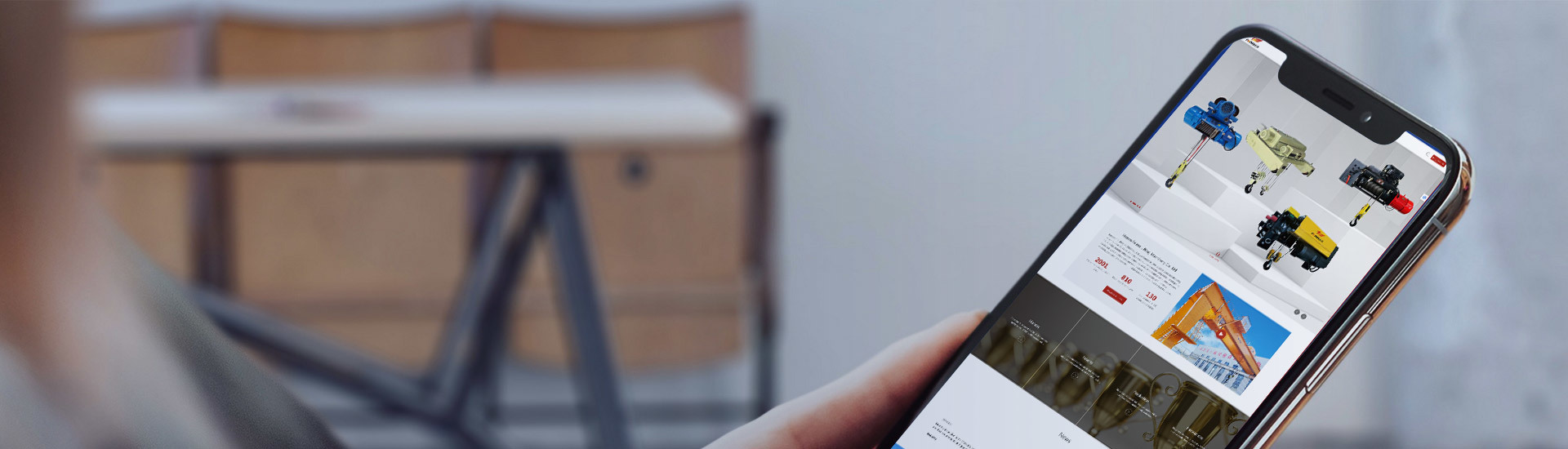
Factory crane safety: shifting from passive prohibitions to intrinsic safeguards.
Release time:
26-10-30
When it comes to the safety of bridge, gantry, and European‑style cranes in industrial facilities, many workshop managers and operators’ first instinct is to recite the “Ten No‑Lift” rules. While this guideline sets a minimum standard, relying solely on rote memorization of prohibitions and wall‑mounted warning signs still fails to prevent subtle, high‑frequency “micro‑risks.” Many crane‑related accidents stem not from deliberate violations by operators, but from a combination of long‑overlooked cognitive blind spots, hidden equipment aging, and gaps in operational scenario management. For years, Feima Crane has been deeply engaged in the R&D and manufacturing of lifting equipment, witnessing countless real‑world operating conditions: the same compliant crane can exhibit vastly different safety performance when deployed in workshops with differing management approaches. The ultimate goal of safety should not be merely “memorizing a few rules,” but rather proactively identifying and mitigating risks through technological safeguards, tiered scenario management, and comprehensive, ongoing monitoring—building a visible, actionable, and substantive factory‑crane safety system that goes beyond mere formalities.
Many on-site hazards are hidden in the details that everyone has grown accustomed to.
Many people assume that danger exists only directly beneath a suspended load—yet this is the most dangerous misconception. Swing of the load, wire rope slipping out of its groove, failure of the hook safety latch, or sling slippage can all expand the risk zone laterally along both sides of the crane’s travel path. In workshops, tooling platforms, temporary material storage areas, and inspection walkways are often set up around the crane’s projected footprint, with personnel moving through these zones frequently. Though they may appear far from the suspended load, workers are in fact continuously exposed to risks of impact and falling. Furthermore, wireless remote controls—now the most common operating terminals for European‑style hoists and single- or double‑girder cranes—are often left lying about, picked up casually by multiple operators, and their emergency‑stop buttons go untested over long periods. Remote controls can be dropped between workpieces, leading to oil‑based contamination that corrodes the buttons, while signals may suffer interference from variable‑frequency drives in the workshop. Should signal loss or false triggering occur, collisions or top‑impact accidents can easily result. A remote control is not merely a handheld device; it is a critical safety terminal. It should be managed through a closed‑loop system that requires registration for retrieval, authorization by designated personnel, and mandatory testing of the emergency stop at every shift, thereby safeguarding the first line of defense at the operator’s console. Nantong City, Tongzhou…
There is another category of hidden risks, known as “equipment sub‑health.” Safety devices on European‑style cranes, variable‑frequency hoists, and chain hoists—such as load limiters, travel limit switches, brakes, and anti‑hook‑release catch plates—are all factory‑tested and certified. However, prolonged, high‑frequency start‑stop cycles, combined with exposure to dust, welding spatter, and acid‑pickling fumes, can gradually render these components ineffective without triggering alarms: load limiters become sluggish, limit switches may only sound an alarm without cutting power, and brake friction pads wear thin—conditions that are difficult to detect quickly with the naked eye. Many workshops limit their inspections to “checking for broken wire strands and listening for unusual noises,” neglecting functional testing of safety devices. Steel wire ropes may appear intact on the surface, yet internal corrosion and core‑lubricant loss have already set in; hook surfaces may show no visible cracks, but their openings can quietly deform. Such latent hazards do not immediately lead to accidents, but they can erupt en masse during a heavy‑load operation or a sudden start‑stop event. Maintenance and servicing go beyond simple lubrication and tightening; it is essential to establish condition‑based, tiered inspection checklists. For workstations subject to frequent heavy loads, shorten the verification intervals. In cleanrooms or in special operating conditions involving acid pickling and phosphating, select appropriate anti‑corrosion and protective measures. Prioritize verifying the effectiveness of safety devices, rather than relying solely on visual inspections.
Safety management, too, should bid farewell to the “one-size-fits-all” approach.
Under the traditional approach, a single set of procedures governs all lifting operations—whether handling small components or hoisting dozens‑of‑tons heavy items—with identical workflows. This leads to either over‑rigorous measures that undermine operational efficiency or inadequate risk controls for high‑risk tasks. Feima Lifting recommends implementing tiered lifting management in workshops: categorizing risks based on load proportion, sling configuration, and working environment. For routine, low‑load lifts at fixed locations, streamline procedures by focusing on personnel positioning and rigging inspections. For heavy loads, eccentric lifts, coordinated operations involving multiple cranes, or cross‑aisle lifts, conduct a thorough risk assessment in advance, establish isolation and warning zones, assign dedicated supervisors and monitors, and ensure closed‑loop verification and clearance upon completion—eliminating the practice of “lifting first, then filing paperwork.”
At the same time, we must dispel a common misconception: lifting safety is not solely the responsibility of crane operators and riggers. Machine tool operators, assembly workers, and logistics personnel all serve as on-site observers. Many potential hazards are first spotted by employees nearby—such as abnormal swinging of suspended loads, unusual noises, tangled slings, or flashing limit‑switch alarms—but too often, people adopt a “not my job, so I’ll stay out of it” attitude. To address this, we should establish a no‑blame reporting system for safety hazards and encourage everyone to “call out” any irregularities in lifting operations. Anyone who identifies a risk has the right to immediately signal a stop, transforming individual oversight into a collective, workshop‑wide safety safeguard.
Technology is becoming the most reliable safeguard for crane safety in industrial facilities. The latest generation of European‑style cranes and intelligent lifting systems are transforming risk management from “human oversight” to “proactive equipment‑based early warning.” These systems enable real‑time load monitoring, collision avoidance between trolleys and carriages, swing suppression during lifting, zone‑based access control, intrusion detection, and cloud‑based storage of operational data. For example, in scenarios where multiple cranes operate simultaneously within the same span, the system automatically locks off interference zones to prevent collisions; it also defines no‑lift areas, ensuring that cranes cannot move into pedestrian walkways or zones with dense tooling. However, it is crucial to recognize that smart monitoring is not a panacea—it serves as an auxiliary safety layer and cannot replace routine inspections, qualified operator certification, or proper rigging‑equipment selection. The safety design of the equipment is intended to provide a final line of defense, not to lower operators’ vigilance. Wuxi City People…
As a manufacturer of lifting equipment, Feima Lifting has always adhered to one guiding principle: a compliant crane is merely the starting point for safety; safety is a systemic endeavor that integrates equipment, environment, personnel, and management. With every bridge crane, gantry crane, explosion‑proof crane, or cleanroom‑grade unit we deliver, we not only provide the product and its certification documents but also furnish operation‑specific safety guidelines tailored to the intended service conditions. In addition, we conduct ongoing follow‑up visits to in‑service equipment, reminding customers to prioritize the verification of safety devices and to reassess their operating procedures whenever process conditions change. Many workshops, after upgrading their equipment or reconfiguring production lines, find that both the lifting environment and the characteristics of the loads have changed yet continue to rely on outdated operating practices—precisely the kind of risk that is all too easily overlooked.
Safety has no endpoint—only a continuous series of new beginnings. We will no longer rely solely on the passive constraints of the “ten prohibitions against lifting”; instead, we will proactively identify previously unseen risk boundaries. We will stop waiting for unusual noises or failures to trigger maintenance; instead, we will conduct routine performance verification of protective devices. And we will no longer place the burden of safety on a handful of operators—we will foster company-wide vigilance, implement tiered control measures, and empower teams with advanced technology.
In the factory, every lift and every placement is a test of safety. With due respect for lifting operations and strict adherence to established limits, we ensure that lifting equipment remains a reliable partner in boosting production efficiency—rather than an unseen source of risk. Feima Lifting works alongside all manufacturing enterprises to build workshop lifting environments that are inherently safe.
Previous :
Related Information
Contact Us
Tel: +86-373-889559
E-mail: hnfeima@126.com fmcrane@feimaelectrichoist.com
Address: Changyuan County, Henan Province, Zhuang Industrial Zone

SAF Coolest v1.3.1.1 设置面板 FQVSD-ZANV-QXSVE-DAS
违禁词: First, best, first-class, leading, unique, king, leader, leader, extreme,
无数据提示
Sorry, the current column has no content for the time being.!
You can view other columns or returnHome Page